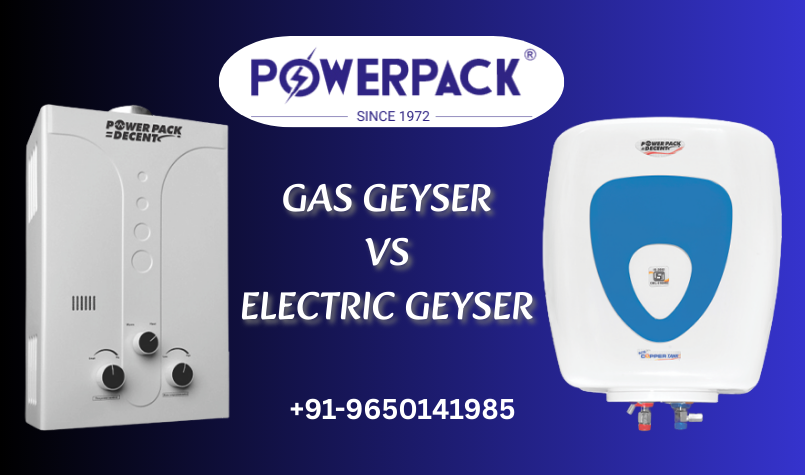
Choosing the best geyser in 2026 is no longer just about heating water—it’s about energy efficiency, running cost, safety, and suitability for your region. One of the most common questions buyers ask today is gas geyser vs electric geyser: which is better?
Both gas and electric geysers have their own advantages depending on usage, household size, climate, and availability of resources. Understanding these differences can help you make the right long-term decision.
A gas geyser heats water using LPG or natural gas. It provides instant hot water and is commonly preferred in areas where electricity supply is inconsistent or power costs are high.
* Instant water heating
* Lower electricity usage
* Suitable for continuous hot water needs
* Ideal for large families
An electric geyser uses an electric heating element to warm stored water. It is widely used in urban homes due to ease of installation and stable performance.
* Easy installation
* Consistent temperature control
* Suitable for small to medium families
* Works well with stable power supply
Initial Cost
* Gas geyser: Slightly higher installation cost due to gas pipeline and ventilation
* Electric geyser: Generally lower upfront cost
Running Cost
* Gas geyser: Lower running cost in areas with affordable gas supply
* Electric geyser: Higher electricity bills with frequent usage
If long-term operational cost is your priority, gas geysers often prove more economical.
Heating Speed
* Gas geysers heat water instantly
* Electric geysers take time to heat stored water
Energy Efficiency
* Gas geysers are more energy-efficient for heavy usage
* Electric geysers are efficient for limited, controlled usage
For continuous hot water demand, gas geysers clearly have an advantage.
Safety Considerations
Safety plays a major role when comparing gas geyser vs electric geyser.
* Gas geysers require proper ventilation to prevent gas buildup
* Electric geysers need correct wiring and earthing to avoid electrical hazards
Modern geysers manufactured by trusted brands include advanced safety features to reduce risks.
Northern & Cold Regions
Gas geysers are preferred due to:
* Faster heating
* Higher water demand during winters
Urban & Metropolitan Areas
Electric geysers are more common because of:
* Easy installation
* Stable electricity availability
Areas with Power Fluctuations
Gas geysers are a better choice where power supply is unreliable.
Choose a gas geyser if:
* You need instant and continuous hot water
* Electricity cost is high
* You have proper ventilation
Choose an electric geyser if:
* Your usage is limited
* You prefer easy installation
* Electricity supply is stable
Manufacturers like Powerpack Electricals offer reliable geyser solutions designed to meet different household and regional needs.
Maintenance and Durability
* Gas geysers require periodic gas line and burner checks
* Electric geysers need regular inspection of heating elements
High-quality geysers from experienced manufacturers such as Powerpack Electricals are built for durability, safety, and long-term performance.
Q: Which is cheaper to run: gas geyser or electric geyser?
Gas geysers usually have lower running costs, especially for frequent use.
Q: Are gas geysers safe for home use?
Yes, when installed correctly with proper ventilation and safety features.
Q: Which geyser is better for a small family?
Electric geysers are suitable for small families with limited water usage.
Q: Is electric geyser maintenance expensive?
No, electric geysers generally have low maintenance requirements.
When comparing gas geyser vs electric geyser, the best choice in 2026 depends on usage pattern, energy availability, safety requirements, and regional conditions.
Gas geysers are ideal for high-usage and colder regions, while electric geysers suit urban homes with moderate hot water needs. Making an informed decision ensures comfort, efficiency, and long-term savings.